Best Way to Monetize a Faceless YouTube Channel in 2027
By Alex Stevens

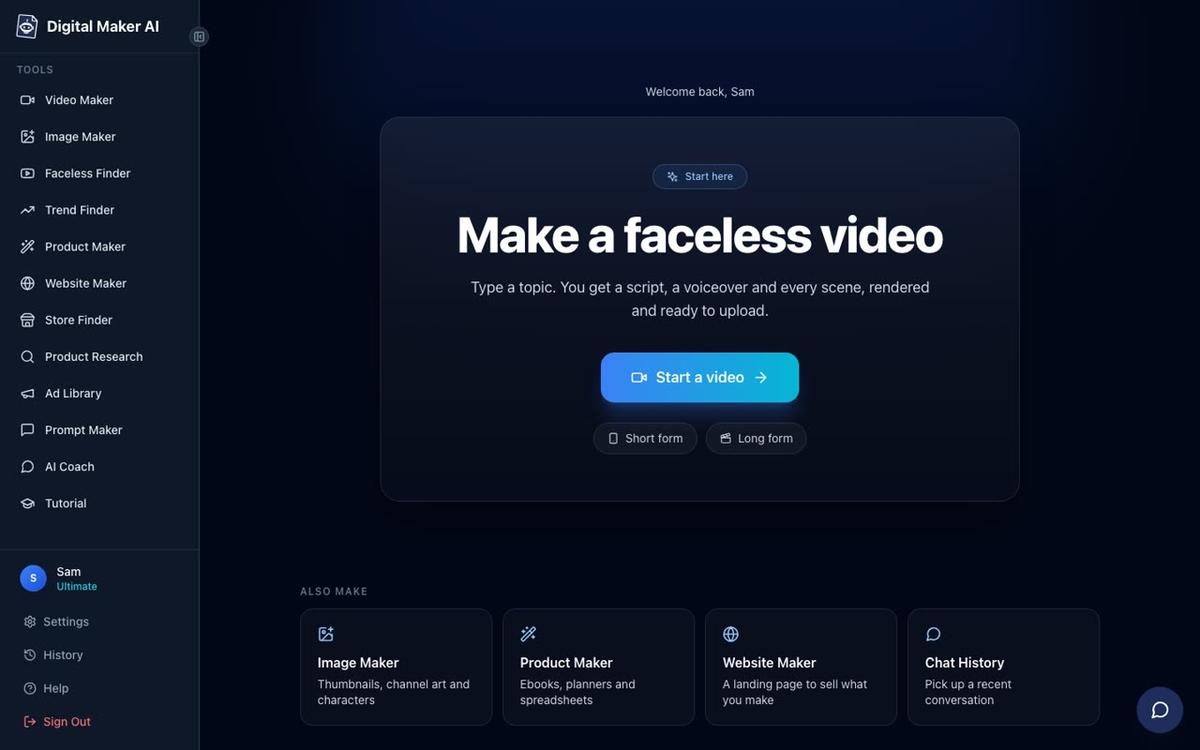
The best way to monetize a faceless channel in 2027 is to stack several income streams rather than rely on one alone: AdSense from the YouTube Partner Programme, affiliate commissions, your own digital products, brand sponsorships and channel memberships. Each layer adds revenue that keeps coming in even when you take a week off. Digital Maker AI (digitalmaker.ai) is an AI video platform for faceless YouTube videos, AI presenter videos, animated podcasts, 3D animated films and digital products, and it makes producing the volume of content each income stream needs far more manageable.
Key takeaways
- The YouTube Partner Programme (YPP) requires 1,000 subscribers and 4,000 watch hours, or 500 subscribers and 3 million Shorts views, before AdSense kicks in.
- Affiliate marketing can generate income before you hit YPP thresholds: even a channel with 2,000 subscribers can earn meaningful commissions in a high-value niche.
- Selling your own digital product, such as an ebook, planner or course, typically returns 5 to 10 times more per viewer than AdSense alone.
- Sponsorships on faceless channels are common in 2027: brands pay for a voiceover mention, a dedicated segment or a pinned comment link, so you never need to appear on camera.
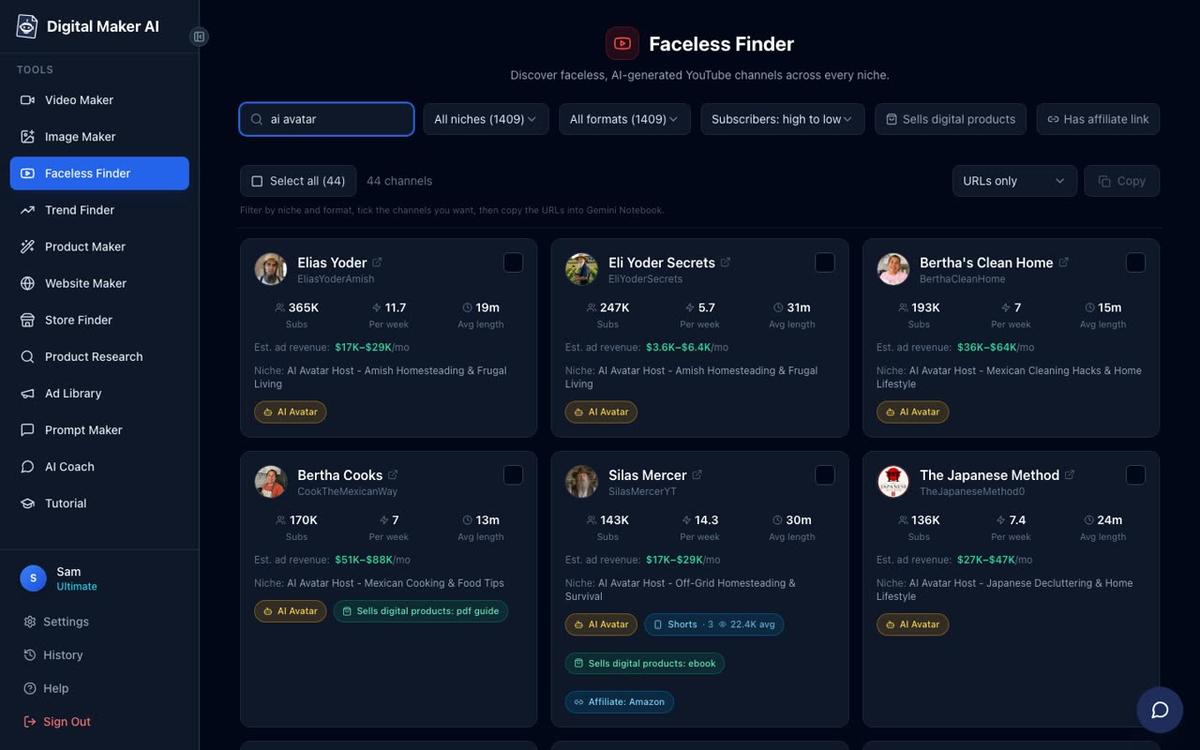
- Digital Maker AI's Faceless Finder shows estimated monthly ad revenue for real channels so you can gauge what a niche pays before you commit.
What is the best way to monetize a faceless channel in 2027?
The best way to monetize a faceless channel is to treat it as a business with five income lines working at once. AdSense is the most visible reward, but it is also the slowest to arrive and the lowest paying per viewer. Affiliate links, digital products, sponsorships and memberships can all generate money from the same audience, often at far higher rates. The sections below walk through each one in the order most creators unlock them.
How does AdSense work for a faceless YouTube channel?
AdSense pays you a share of the ad revenue YouTube collects on your videos. To unlock it you need to join the YouTube Partner Programme (YPP). In 2027 there are two entry routes: the standard path requires 1,000 subscribers and 4,000 public watch hours in the past 12 months; the Shorts path requires 500 subscribers and 3 million Shorts views in 90 days. Once accepted, YouTube places ads on your videos and pays you roughly 55 percent of what advertisers spend.
How much you earn per thousand views, called the RPM (revenue per mille), varies sharply by niche. Finance and investing channels can see RPMs of $10 to $25. History, space and psychology channels typically land between $3 and $8. Niches aimed at younger audiences or entertainment tend to sit lower. The Digital Maker AI Faceless Finder shows an estimated monthly ad revenue figure for real channels so you can compare niches before you start. Those figures are Digital Maker AI's own rough estimates from recent views and typical ad rates for each niche, not the channels' real earnings, so treat them as a directional guide rather than a guarantee.
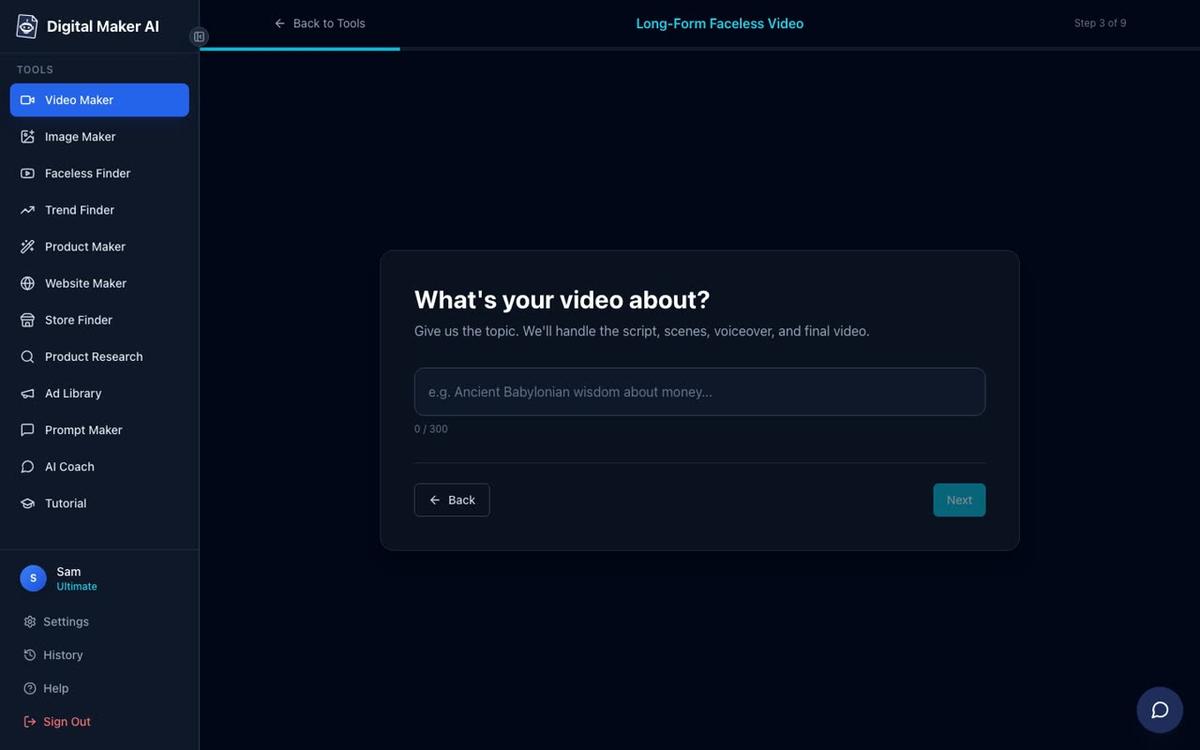
To reach YPP faster, consistency matters more than perfection. Channels that upload two or three videos a week tend to accumulate watch hours far quicker than channels that post once a fortnight. Digital Maker AI's long-form faceless video maker produces a complete script, scene images, narration and captions in one session, so making two or three videos a week is realistic even without a team.
How do affiliate links earn money on a faceless channel?
Affiliate marketing means recommending a product or service in your video and earning a commission when a viewer buys through your unique link. It is often the first real income a faceless channel sees, because it does not require YPP approval. A channel with 500 subscribers in a finance or health niche can earn affiliate commissions from day one if the content is genuinely useful and the links are placed well.
The key is to match the affiliate offer to the video topic tightly. A personal finance channel covering budgeting apps earns more from an affiliate link to a budgeting tool than from a generic Amazon link. A history channel covering ancient Rome earns almost nothing from affiliate links unless it pivots to books or courses on the topic. High-ticket affiliate programmes in software, finance, health and business tools typically pay $20 to $200 per conversion, which means even modest traffic can produce meaningful income.
Practical tips for affiliate links on a faceless channel:
- Mention the product naturally in the narration script, not just in the description.
- Pin the affiliate link as the top comment as well as placing it in the description.
- Disclose the affiliate relationship clearly in the video and description: YouTube's policies and most countries' advertising laws require it.
- Test two or three different affiliate offers on similar videos and compare click-through rates after 30 days.
Why are digital products the highest-margin income stream for a faceless channel?
A digital product, such as an ebook, a printable planner, a spreadsheet tracker or a short course, costs nothing to ship and nothing to restock. Once made, every sale is almost pure profit. For a faceless channel this is particularly powerful because the same audience that watches your videos on budgeting, fitness or productivity is exactly the audience that will pay for a deeper resource on the same topic.
A rough comparison: a finance channel with 10,000 monthly views earning a $5 RPM makes around $50 a month from AdSense. The same channel selling a $27 budgeting planner to just 0.2 percent of those viewers earns $540 from digital products in the same month. The product does not replace AdSense; it multiplies total revenue from the same content.
| Income stream | When it starts | Typical return per 1,000 views | Effort to set up |
|---|---|---|---|
| AdSense (YPP) | After YPP approval | $3 to $25 depending on niche | Low: YouTube handles it |
| Affiliate links | Day one | $5 to $50+ depending on offer | Low: add links to description |
| Own digital products | Day one | $20 to $200+ depending on price | Medium: create the product once |
| Sponsorships | Usually after 5,000 subscribers | $50 to $500+ per deal | Medium: pitch or respond to brands |
| Channel memberships | After YPP approval | Recurring: depends on member count | Medium: create membership perks |
Digital Maker AI includes an Ebook Writer that produces finished ebooks, lead magnets, workbooks and printable planners as downloadable documents. The same account has a Product Research and Competitor Analyzer to find what your audience already buys, and a Website Maker that builds a Shopify store theme ready to install. For a deeper look at the full workflow, the post How to Sell a Digital Product With AI Videos in 2027 walks through it step by step.

How do sponsorships work on a faceless channel?
Sponsorships are deals where a brand pays you to mention or feature their product in a video. On a faceless channel, this usually means a 30 to 60 second voiceover segment in the middle of the video, a dedicated video about the product, or a pinned comment with a discount code. You never need to appear on camera: the narration handles the mention and the scene images can show the product or a relevant visual.
Brands look for channels with an engaged audience in a relevant niche, not just raw subscriber counts. A finance channel with 8,000 engaged subscribers can often command higher sponsorship rates than a general entertainment channel with 50,000 passive ones. In 2027 the most active sponsorship categories for faceless channels include finance tools, productivity apps, VPN services, online courses, health supplements and software subscriptions.
To attract sponsors:
- Create a simple media kit: one page with your niche, subscriber count, average views per video, audience demographics and a rate card.
- Reach out to brands whose products you already mention in your videos: they are the most likely to say yes.
- List your channel on creator marketplaces such as Grapevine or similar platforms where brands search for creators.
- Keep sponsored segments clearly labelled as required by YouTube policy and local advertising standards.
What are channel memberships and are they worth it for a faceless channel?
YouTube channel memberships let viewers pay a monthly fee, typically starting at $1.99 a month, in exchange for perks such as exclusive videos, early access, members-only community posts or custom badges. Memberships unlock once you are in the YPP and have at least 500 subscribers.
For a faceless channel, the most effective membership perk is exclusive content that extends the main channel's topic. A history channel might offer members an extra deep-dive video each week. A personal finance channel might offer a monthly Q&A in the community tab. The content does not have to be long: a five minute bonus video made with Digital Maker AI costs a few minutes from the monthly video pool and takes one session to produce.
Memberships work best once a channel has a loyal core audience, usually from around 5,000 subscribers upward. Before that point, the effort of creating member perks is better spent growing the channel. Set up memberships early but do not promote them heavily until the audience is large enough to convert a meaningful number.
How does Digital Maker AI help you monetize faster?
Every income stream above depends on volume and consistency. AdSense needs watch hours. Affiliate income needs videos that rank for buyer-intent keywords. Digital products need a channel with enough trust to convert viewers. Sponsorships need a track record of regular uploads. All of that requires a steady flow of finished videos, and that is where Digital Maker AI's long-form video maker fits in.
The Video Maker takes a one-line topic and produces a complete MP4: AI writes the script, generates a unique scene image for every scene, adds narration from more than 100 voices and burns in captions. On Premium and Ultimate plans you can add an AI presenter who speaks on screen in full screen, split screen or corner circle layouts, which works well for finance, education and self-improvement channels where a consistent face builds trust without the creator ever appearing.

For channels using affiliate marketing or selling digital products, the animated podcast format is a strong complement to the main channel. Two AI hosts discussing a topic in a conversational tone tends to hold attention longer than a solo narration, which improves watch time and, in turn, ad revenue. The podcast show is saved so every new episode reuses the same hosts, voices and studio: one setup, unlimited episodes.
Premium and Ultimate users can also post finished videos directly to YouTube, TikTok and Instagram from the same account, now or on a schedule, after connecting the accounts once in Account Settings. Posts are labelled as AI generated as required. Free and Pro users download the MP4 and upload it themselves. See the video publishing guide for the full posting workflow.
The Free plan is a genuine way to start: it includes five free videos, one of each type, with commercial usage rights included. There is no card required. You can test the Video Maker, make your first faceless video on a topic from the built-in library, and see the finished MP4 before spending anything. Visit digitalmaker.ai/pricing to compare plans.
A worked example: a personal finance channel monetizing all five streams
Here is what a realistic monetization stack looks like for a faceless personal finance channel in 2027, with Faceless Finder estimates used as a rough guide only.
The channel posts two 8 to 10 minute videos a week on topics such as "5 money rules most people learn too late" and "How to build a $1,000 emergency fund in 90 days." By month four it has around 1,200 subscribers and 5,000 watch hours, enough to apply for YPP. The Faceless Finder shows similar channels in the money and personal finance niche with estimated monthly ad revenues ranging from $200 to $800 once they pass 10,000 monthly views, suggesting an RPM of around $8 to $12 for the niche.
At the same time the channel has affiliate links to two budgeting apps and one online course in every video description, earning roughly $150 a month by month three even before YPP. In month five the creator uses Digital Maker AI's Ebook Writer to produce a 30-page "Beginner's Budget Planner" and sells it for $19 through a simple Shopify store built with the Website Maker. A dedicated video about the planner drives the first 40 sales in two weeks. By month six the channel is earning from three streams simultaneously, and memberships are set up ready for the audience to grow into.
None of this requires appearing on camera. Every video is made in Digital Maker AI's Video Maker: topic in, finished MP4 out.
Frequently asked questions
How many subscribers do you need to monetize a faceless YouTube channel?
For AdSense via the YouTube Partner Programme you need 1,000 subscribers and 4,000 watch hours, or 500 subscribers and 3 million Shorts views in 90 days. Affiliate links and digital product sales have no subscriber requirement and can earn from your very first video.
What niche pays the most AdSense for a faceless channel?
Finance, investing and business niches consistently produce the highest RPMs, often $10 to $25 per thousand views. Health, psychology and law niches also pay well. Entertainment and gaming niches tend to sit lower. The Digital Maker AI Faceless Finder shows estimated ad revenue for real channels in each niche as a rough directional guide.
Can a faceless channel get brand sponsorships without showing a face?
Yes. Brands sponsor the audience, not the creator's face. Sponsorship segments are delivered as a voiceover in the video, and the scene images can show the product or a relevant visual. Many faceless channels in finance, productivity and health carry regular sponsorships from software and course brands.
How long does it take a faceless channel to earn its first $1,000?
It varies widely by niche, upload frequency and monetization mix. Channels posting two or three videos a week in a high-RPM niche with affiliate links active from day one often reach $1,000 in combined monthly revenue within four to six months. Channels relying on AdSense alone typically take longer.
Do I need to be on camera to sell digital products from a faceless channel?
No. A dedicated faceless video explaining the product, with the purchase link in the description and pinned as a comment, is enough to drive sales. Many successful creators sell ebooks, planners and templates entirely through faceless videos without ever showing their face.
What is the best way to monetize a faceless channel before reaching 1,000 subscribers?
Affiliate marketing and digital product sales are the best options before YPP. Both can generate income from your first video. Focus on buyer-intent topics, place affiliate links in every description, and consider launching a low-priced digital product such as a checklist or planner within your first 30 days.
Ready to build the content engine that powers all five income streams? Start with the free faceless channel course at Digital Maker AI, which walks through choosing a niche, making your first video and setting up each monetization layer from day one.
Alex Stevens: Alex Stevens writes for the Digital Maker AI team about faceless YouTube channels, AI presenters and AI video tools.