Digital Products vs Physical Products: Why Digital Wins
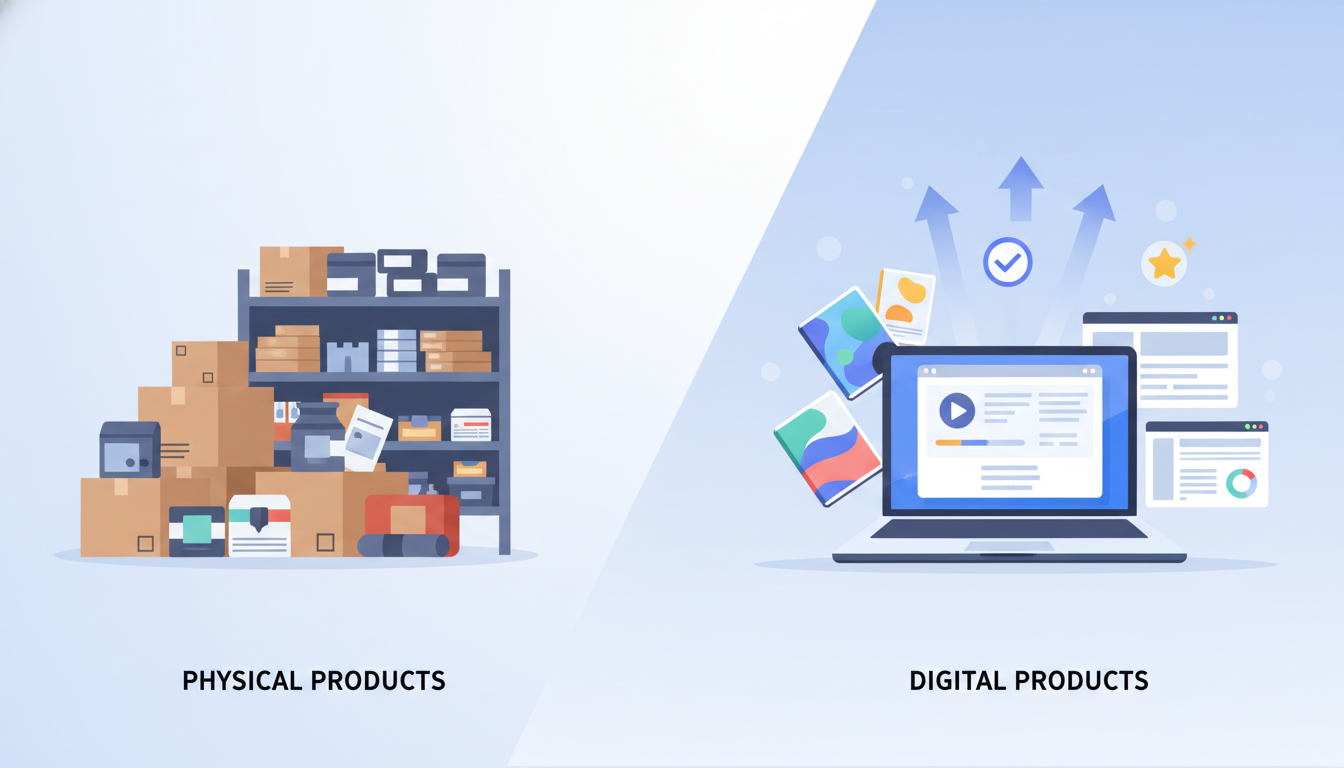
The debate between digital vs physical products has become increasingly relevant as entrepreneurs worldwide seek the most profitable and scalable business models. While physical products have dominated commerce for centuries, the digital revolution has fundamentally shifted the landscape, offering unprecedented opportunities for creators and business owners alike.
In today's fast-paced economy, choosing the right product type can make or break your entrepreneurial journey. Whether you're a seasoned business owner or just starting out, understanding the advantages of digital products over their physical counterparts is crucial for making informed decisions about your future ventures.
Understanding the Core Differences in Digital vs Physical Products
Before diving into why digital products reign supreme, let's establish clear definitions. Physical products are tangible items that customers can touch, feel, and physically possess – think books, clothing, electronics, or furniture. Digital products, on the other hand, are intangible assets delivered electronically, including ebooks, online courses, software, templates, and digital art.
The fundamental difference lies not just in their tangible nature, but in how they're created, distributed, and scaled. This distinction creates a ripple effect that impacts every aspect of your business model, from initial investment to long-term profitability.
The Scalability Advantage: Why Digital Products Win
Perhaps the most compelling argument for digital products is their unmatched scalability. Once created, a digital product can be sold an infinite number of times without additional production costs. This means your first sale and your thousandth sale have dramatically different profit margins.
Consider an online course: after the initial investment of time and resources to create the content, each subsequent sale requires no additional manufacturing, storage, or shipping. You can sell to one customer or one million customers with virtually the same operational overhead.
Physical products, conversely, require continuous investment in materials, manufacturing, and logistics for each unit sold. As your business grows, these costs scale proportionally, limiting your profit potential and requiring significant capital investment.
Cost Efficiency: Lower Barriers to Entry
Starting a digital product business requires significantly lower upfront investment compared to physical products. You don't need:
- Manufacturing equipment or facilities
- Raw materials or inventory
- Warehouse space for storage
- Complex supply chain management
- Shipping and logistics infrastructure
Instead, digital product creation primarily requires time, expertise, and basic digital tools. With platforms like Digital Maker AI, even the content creation process becomes streamlined, allowing entrepreneurs to leverage artificial intelligence to develop high-quality digital products efficiently.
Global Reach and Instant Distribution
Digital products eliminate geographical constraints that often limit physical product businesses. Your customers can access your products instantly, regardless of their location, without worrying about shipping costs, delivery times, or international customs.
This global accessibility opens up massive market opportunities. A course created in your home office can reach students in Tokyo, London, or São Paulo simultaneously. The internet becomes your distribution network, operating 24/7 without additional staff or overhead costs.
Higher Profit Margins: The Digital Advantage
The economics of digital vs physical products heavily favor the digital side when it comes to profit margins. Digital products typically enjoy profit margins of 80-95%, while physical products often struggle to achieve margins above 20-40%.
These superior margins stem from:
- No cost of goods sold (COGS) after initial creation
- Minimal storage and distribution expenses
- Reduced customer service complexity
- No inventory management or spoilage concerns
- Automated delivery systems
Higher margins mean more resources available for marketing, product improvement, and business growth, creating a positive feedback loop that accelerates success.
Flexibility and Rapid Iteration
Digital products offer unparalleled flexibility for updates and improvements. Found a typo in your ebook? Fixed in minutes. Want to add a new module to your online course? Updated instantly. Customer feedback suggests improvements? Implemented without costly retooling.
Physical products require extensive planning, manufacturing lead times, and significant costs to make changes. This agility allows digital product creators to respond quickly to market demands and continuously improve their offerings based on customer feedback.
Environmental Impact and Sustainability
In an increasingly environmentally conscious world, digital products offer a sustainable alternative to physical manufacturing. They require no raw materials, generate no physical waste, and eliminate transportation-related carbon emissions.
This environmental advantage not only aligns with global sustainability goals but also appeals to eco-conscious consumers who prefer businesses that minimize their environmental footprint.
Passive Income Potential
Digital products excel at generating passive income streams. Once created and launched, they can sell continuously with minimal ongoing effort. Automated systems handle payment processing, product delivery, and basic customer service, allowing you to earn while you sleep.
While physical products can also generate ongoing revenue, they typically require continuous involvement in inventory management, shipping, and quality control, making truly passive income more challenging to achieve.
Leveraging AI for Digital Product Creation
The rise of artificial intelligence has made digital product creation more accessible than ever. Tools like Digital Maker AI empower entrepreneurs to create professional-quality digital products without extensive technical expertise or design skills.
Whether you're developing online courses, creating digital templates, writing ebooks, or designing software solutions, AI-powered platforms can significantly reduce the time and effort required while maintaining high quality standards. This technological advantage further tilts the digital vs physical products equation in favor of digital solutions.
Market Demand and Consumer Behavior
Consumer behavior has shifted dramatically toward digital consumption. People increasingly prefer:
- Instant access to products and services
- Digital learning and entertainment options
- Convenient, location-independent solutions
- Environmentally responsible purchases
- Cost-effective alternatives to physical products
This behavioral shift creates a growing market for digital products while simultaneously challenging traditional physical product businesses to adapt or risk obsolescence.
Getting Started with Digital Products
Ready to capitalize on the digital product advantage? Here's a practical roadmap:
1. Identify Your Expertise: Consider your skills, knowledge, and experiences that could provide value to others.
2. Research Market Demand: Validate that people are willing to pay for solutions in your chosen area.
3. Choose Your Product Type: Whether it's courses, ebooks, templates, or software, select a format that matches your strengths.
4. Leverage AI Tools: Platforms like Digital Maker AI can accelerate your creation process and improve product quality.
5. Build and Launch: Start with a minimum viable product and iterate based on customer feedback.
6. Scale and Optimize: Use the inherent scalability of digital products to grow your business efficiently.
Conclusion: The Digital Future is Now
The comparison between digital vs physical products reveals a clear winner for most modern entrepreneurs. Digital products offer superior scalability, higher profit margins, global reach, and environmental sustainability – advantages that are difficult to match with traditional physical products.
The barriers to entry continue to lower as AI tools and platforms make digital product creation more accessible to everyone. Whether you're looking to supplement your income or build a full-scale business, digital products provide the foundation for sustainable, scalable success in today's economy.
The question isn't whether digital products will dominate the future – they already are. The question is: will you be part of this digital revolution, or will you watch from the sidelines as others capitalize on these unprecedented opportunities?